
The Day of the Dead
The light from distant days
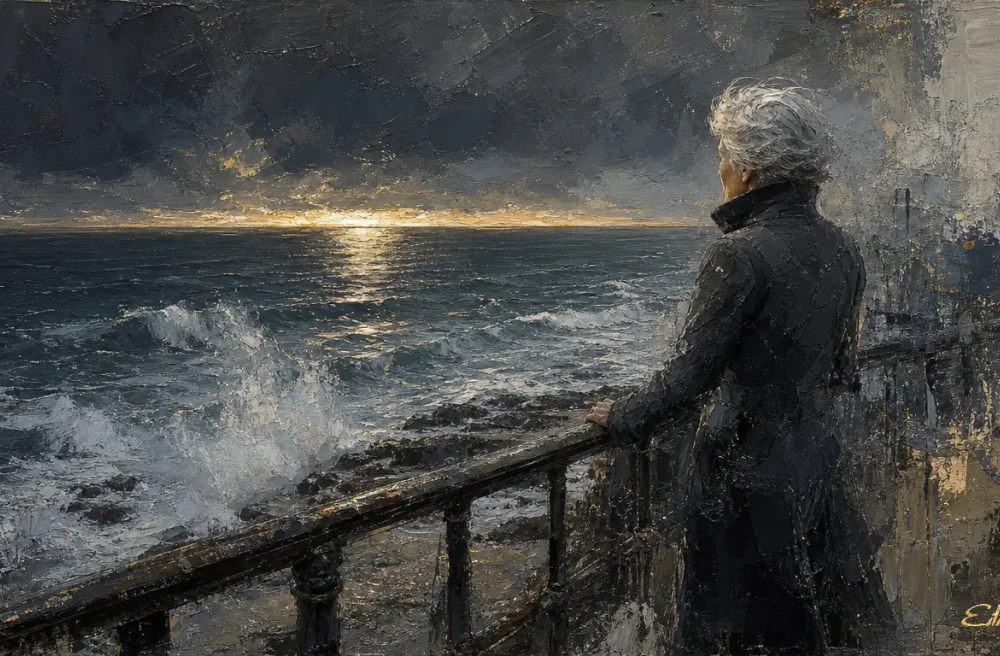
The woman sits before the computer, her hands away from the keyboard. Beyond the window the Atlantic has turned the colour of pewter, and the waves come in livid and boiling, throwing themselves against the rocks below the house with a rage that has nothing personal in it. The wind finds the gaps in the old sash frames and sets up a thin, steady note, the sound of a kettle that will never quite boil. She has lived with this note for twenty years. She hears it the way one hears one’s own breathing, which is to say she hears it only when she chooses to.
This morning she chooses to. The second of November, and the house is dim at ten o’clock, the lamps already on, the dogs asleep in a heap by the stove. Somewhere on the mainland the bells will have rung for the dead; out here there is only the wind, which rings for everyone.
The Irish storm brings back other storms. Days heavy with rain in a town on the Ligurian coast, the shutters banging, the palms along the promenade bent double and flinging their fronds about like women shaking out wet hair. She remembers the smell of those days — salt, and the wet cobbles of the narrow road that crosses the village, and underneath it the faint sweetness of oranges from the market stalls that had packed up early. She remembers being alone in them, fourteen, fifteen, a girl who had learned already that loneliness and contentment could occupy the same room without quarrelling. That was the secret she carried about with her then, folded small, like a note passed in class. She was never lonely in the way other girls meant it. She had the sea.
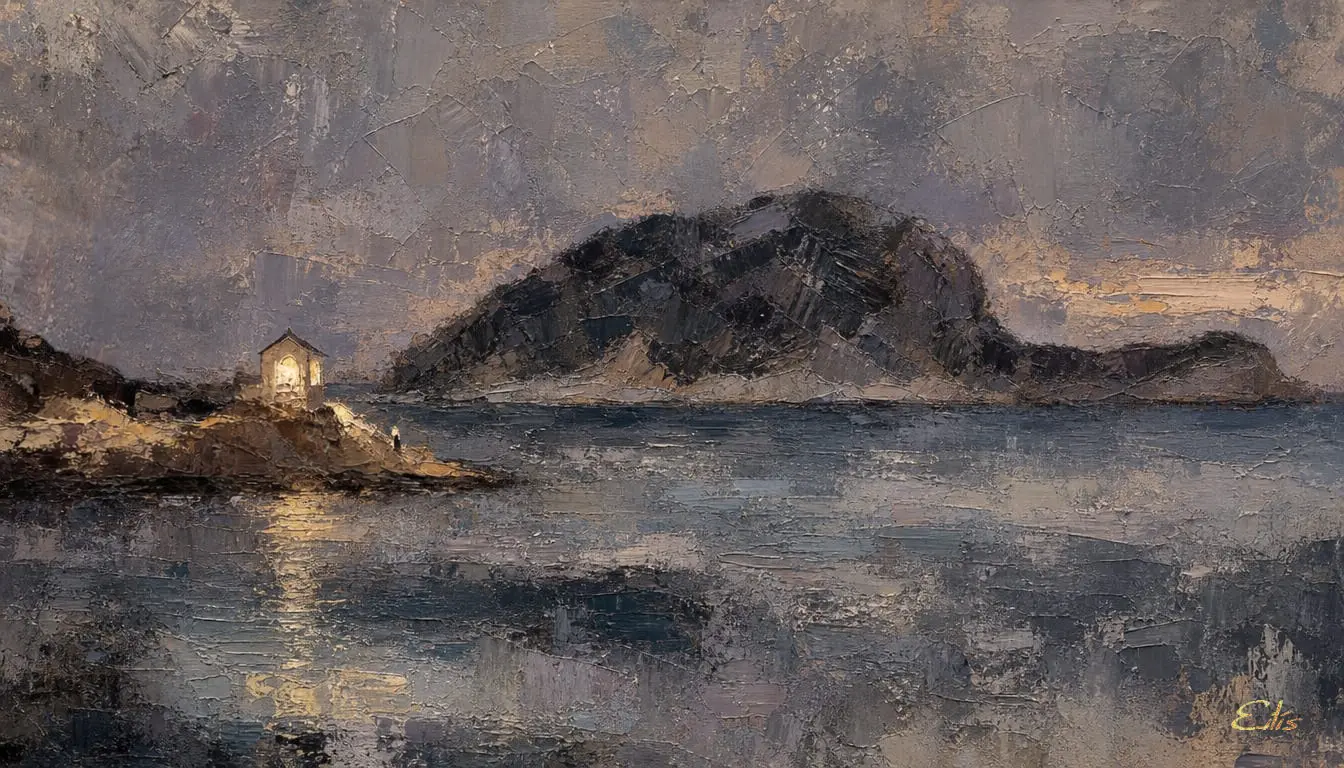
Her hand moves at last. The browser opens to the page she keeps bookmarked, the one she visits more often than any other, and there it is: Alassio, live on the webcam, in the grey light of a northern Italian winter morning. The camera looks down from somewhere above the promenade. The beach is empty but for a scatter of gulls facing into the wind like a congregation that has forgotten its prayers, and a single dog, far off, nose to the sand, following whatever scents the past summer has left for him — the only traces of it now, and legible to no one else. The umbrellas have gone. The pedalos are stacked and chained. The water that in August is a blue so dense it seems painted is now the same colour as the water outside her window, as if the two seas had agreed, this one day of the year, to wear the same mourning.
The Alassio of her youthful years. She says the phrase to herself and hears how it has changed its meaning. There was a time when that town held her future the way the bay holds the island — close, visible, a thing one could point to. Now most of that future is behind her, and the town on the screen is a place she can look at but no longer enter, a room glimpsed through a keyhole.
She has never been back. Thirty years ago she sold the house, signed the papers in a solicitor’s office that smelled of floor polish and old paper, and walked out into a May morning without turning round, and in all the years since she has never once stood on that promenade again. Part of her would like to. It is a small, stubborn, childish part, the part that still wants to touch a place where she was happy, as if happiness could be stored in the stone of a sea wall and recovered by laying a hand on it. The rest of her knows better. Places keep best wrapped in the mind, where the light stays as it was and the shops do not change hands and the people one loved are still standing at the water’s edge. Thirty years will have done to Alassio what thirty years do to everything. And she herself is the greater change. The girl who walked that beach is someone she can describe but no longer be; her life has moved on to other rooms, other weather, another language in her mouth on waking. There is no road back to a former self. One can only look — as she looks now, through the small window of a webcam, at a beach where the gulls stand with their backs to the wind.
The Day of the Dead. The words arrive without her summoning them, and bring their company.
Her mother first, because her mother was first in everything. Slender, industrious, her hands always at some task — shelling peas into a bowl on her lap, stirring a risotto, and in the winter evenings knitting, the needles ticking under the lamp while the radio murmured. She knitted Aran: thick cream wool worked into cables that twisted like rope, honeycomb and diamond panels framed in moss stitch, the patterns of an island whose women she would never meet, learned from a book and followed row by row with a patience and a stubborn tenacity the girl could only marvel at. Every twist of cable in the sweater that would be the girl’s by Christmas carried a love that was rarely spoken and always certain. The woman still has one of those sweaters, fondly kept in a drawer with lavender. Her mother was, among people, the nearest thing to a friend the girl ever allowed herself. They could sit for an hour without a word and come away feeling they had talked. And her mother loved the sea, loved it with the particular hunger of someone who had grown up inland and come to it late, and she would stand at the water’s edge with her shoes in her hand and her skirt wet to the knee, laughing, while the girl waded out beside her. The woman’s fingers, on the desk, make a small involuntary movement — the gesture of lifting a hem clear of the foam. She notices it and lets her hand lie still.
Her father. He saw her as a princess — that was his word, used without irony, a big man with a small vocabulary for tenderness who spent it all on her. He worked hard, all his life, in the way of a man who never shirked a responsibility and never thought to mention it; whatever the family had, it had because he had given his best to get it. He came home tired. She remembers the tiredness in him, the way he lowered himself into the chair by the window as though setting down something heavy he had carried up the hill. And still, every time, he found room in the evening for her. She would bring him the exercise book with its crossings-out and read him what she had written that day, and he would listen with his eyes half closed and his hands folded over his stomach, and at the end he would say good, good, as though she had settled some matter of state. He was proud of the way she put words together — proud of the stories she conjured out of nothing but a wet afternoon and a girl’s attention. He never pretended to understand where they came from. He only knew they were hers, and that was reason enough.
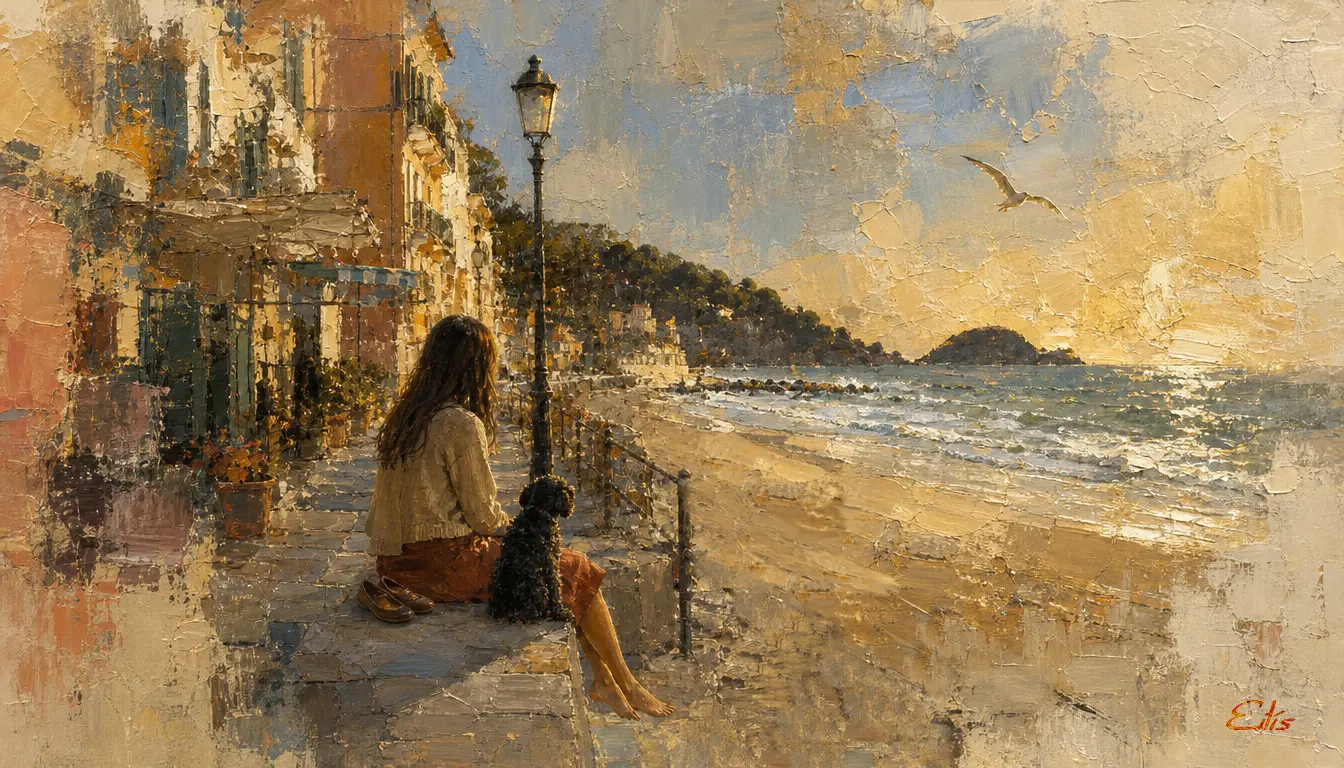
And the little dog. A small black poodle, a female with a tight astrakhan coat that smelled of salt by the end of every walk and eyes like two drops of coffee, who ran sideways in her excitement so that she seemed always to be arriving at an angle. She was the girl’s one true companion. Not the nearest thing to one — the thing itself. She went with her on the damp sand in the off-season mornings, nose down, tail up, inventing a thousand urgent errands and abandoning each one for the next, and when the girl sat on the sea wall to stare at the island the little dog sat too, pressed against her hip, and stared at whatever it is dogs stare at, and neither of them needed the other to explain. When the illness came there was nothing to be done for it, and the woman was twenty-six, and it fell to her to decide. She held the small black head in the vet’s room and gave the word. It was the hardest thing she had been asked to do in her life up to then, and she has done harder things since, but none of them has kept its shape in her the way that one has — the way a fossil keeps the shape of a fern.
All of them gone. The woman does not say long gone, though it is true. Long is a word for distance, and they are not far. They are as near as the island on the screen — that dark hump of rock and pine a few hundred metres off the beach that she stared at for an entire childhood and never once set foot on, because it was private, because the boats did not go, because it belonged to someone else. So close, and so entirely out of reach. She has thought, lately, that this is the truest image she possesses of the dead.
The only living thing on this cold day is memory. She would once have found that a melancholy thought. This morning it seems merely accurate, and there is a kind of rest in accuracy. The memories come in on the Irish wind and they have their own light — a warm, yellow, late-afternoon light, the light of a Ligurian September — and the sensations they carry belong to a girl she can see quite clearly and can no longer altogether claim. That girl is sitting on the sea wall with her shoes off. That girl is watching foam slide back across the sand and leave a lace of bubbles that pop one by one. The woman knows what the girl is feeling. She cannot always find the thread that connects the two of them.
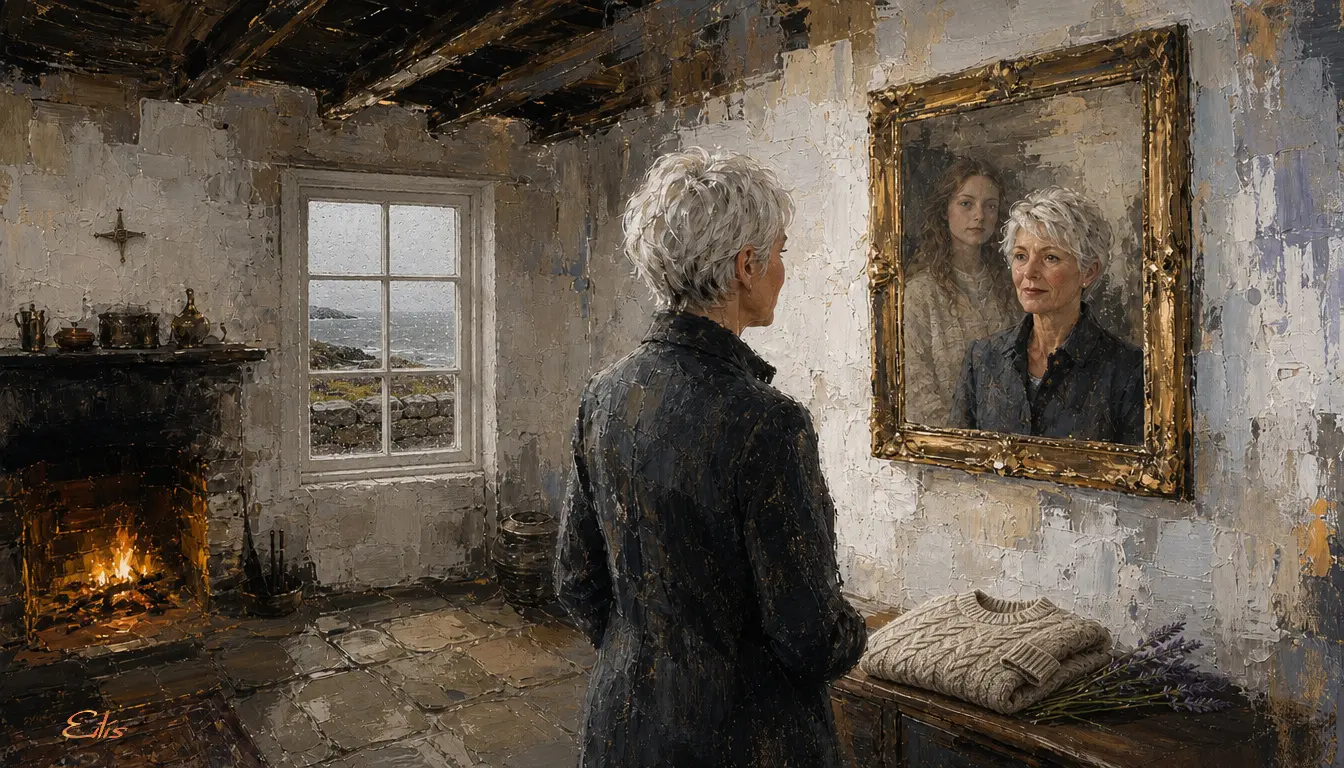
She gets up and goes to the mirror in the hall, as if to check. The glass gives her back a woman of seventy, hair gone the colour of the sea outside, the skin at her throat gathered into soft folds, the mouth set in the line it has settled into after decades of being pressed shut over things that did not need saying. It is a face she would not have recognised at twenty and would, she thinks, have found a bit disappointing. Yet when she looks for longer than is comfortable — and she makes herself look — something shifts behind the eyes. The quiet, introverted girl is still there. She has simply been given more room, and more weather. Sometimes she still vibrates, this Eilís, to exactly the things that moved her at fifteen: a particular quality of light on water, a dog running on an empty beach, the word island. The body is a different body. The tuning fork inside it has not changed its note.
She goes back to the desk. The dogs do not stir.
She knows she is on the path of no return. The phrase has no drama in it for her; it is the plainest thing in the world, a direction, like north. She knows she is old because the future has stopped making promises. For most of her life it promised constantly, extravagantly, and she believed it the way one believes a charming liar, and the believing was itself a kind of happiness. Now it has fallen silent. It offers her a few more winters, the dogs, the house, the work. These are not small things. But they are not promises, and she has noticed that the place she likes to go, the only place she visits again and again, is the one that no longer has a future at all. Her past has become a town she can walk round in any weather, where every door stands open.
It was a past made of small things. She does not regret this; she has lived long enough to distrust anyone who claims a past made of large ones. The iridescent skin of foam on a breaking wave, the way it caught colour for a second — green, rose, a thread of gold — before the sand drank it. Light sliding along a gull’s wing as it banked, so that for an instant the bird seemed made of water. The island, always the island, its pines black against the evening, the bells of its hidden church carrying across on still days as though from another century. These were the whole of her inheritance, and they have proved enough.
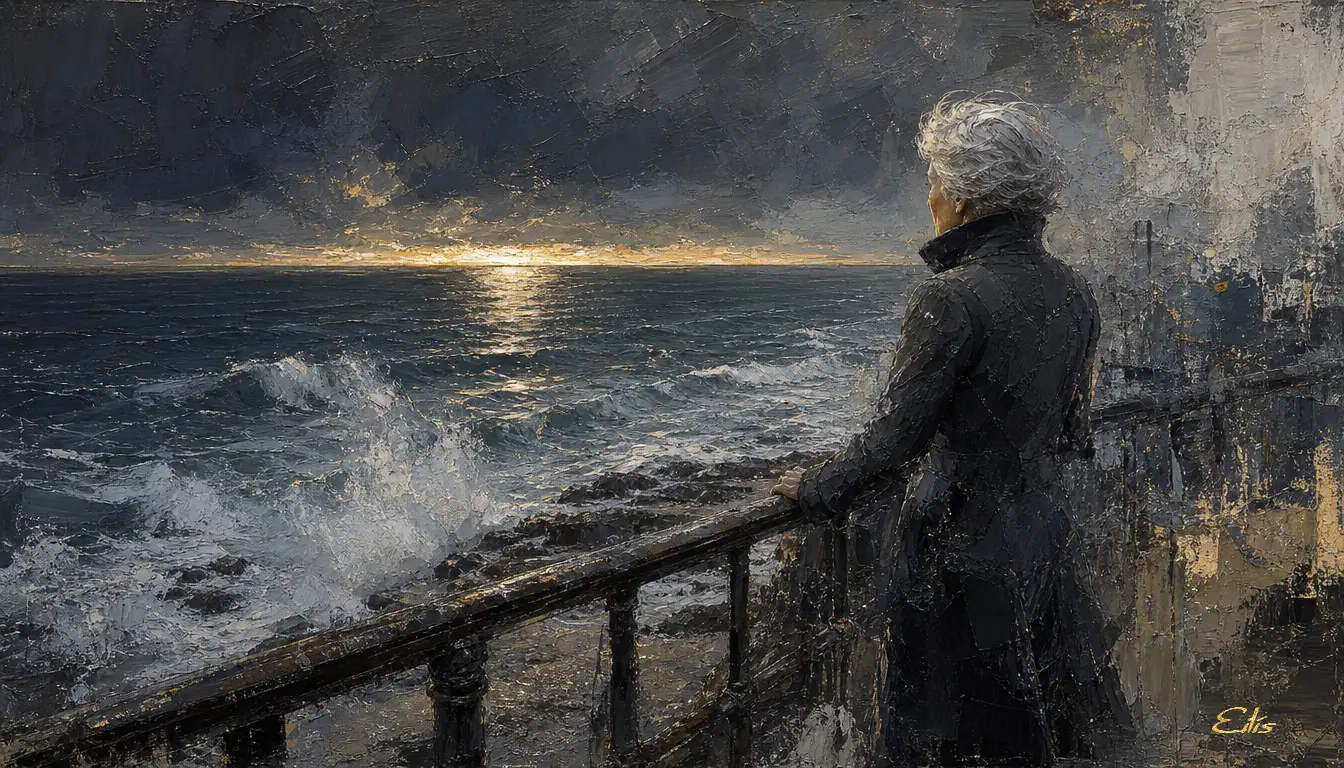
She looks at the Irish sea now, and at the Ligurian sea on the screen, and tells them both what she is feeling. She has done this all her life. It is strange — she knows it is strange — to call the sea a constant, when there is nothing on earth more restless, more given to changing its mind. But that is the nature of the friendship. A friend who never changed would be a photograph. The sea is a friend who is always in motion and always, somehow, there; whose breath she feels at night through the wall, and in the morning in the salt on the window glass; who listens without interrupting and has never once, in sixty years, offered her a bad piece of advice.
The sea that welcomed her dreams in youth now comforts her in old age, and its waves bring back to her the light of distant days…