The Apology of Leaves
Welcoming the Autumn
In the middle of October the wood at the end of the lane stops pretending. All summer it has held a single colour, a green so steady the eye slides across it as it slides across the wallpaper of a familiar room. Within a fortnight every maple along the lake brings out what it has kept. Copper comes first, at the tips of the highest branches, where the cold arrives a few nights before it reaches the ground. Ochre follows, and a burnt orange that runs out along the veins, and a yellow so clear it seems lit from inside, and here and there a leaf the dark red of wine left in the glass overnight. The beeches join a week later in their grave tawny. On the far shore the birches release their small coins one at a time, and the bracken on the hillside takes the colour of a fox and keeps it until the rain beats it flat.
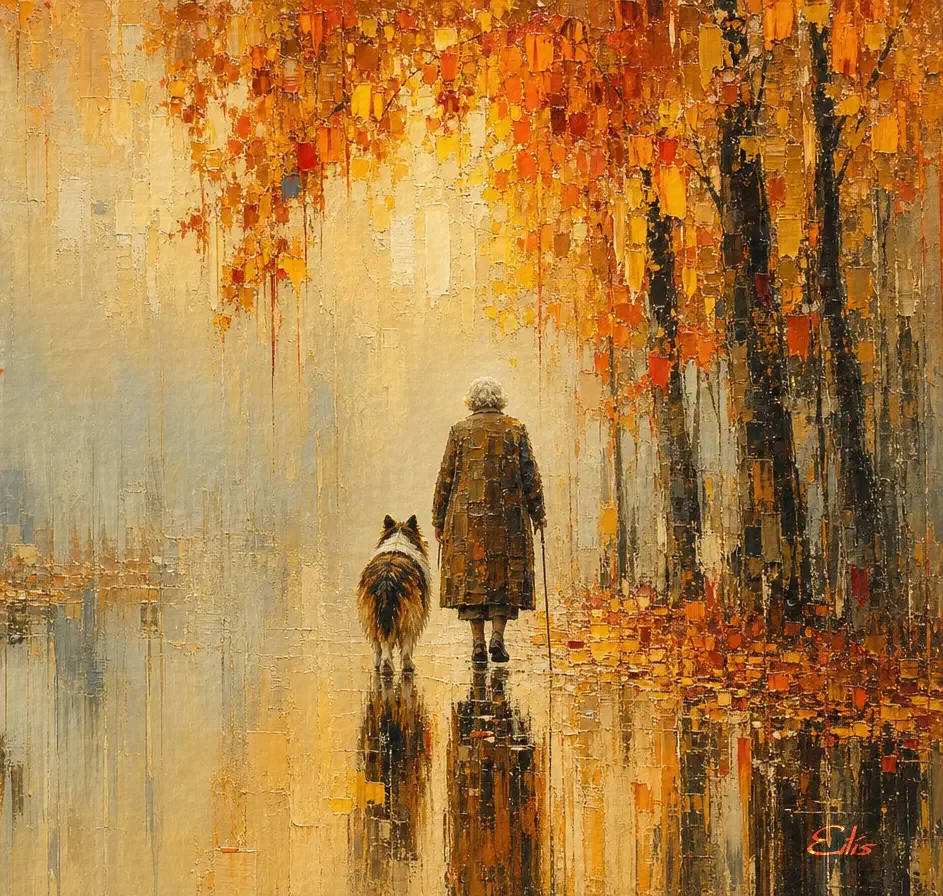
I walk there most mornings with the collie, and in October the walk changes character. The lane, grey and unremarkable from April to September, turns into something to listen to. Dry beech leaves crackle like the paper round a bunch of flowers. Maple leaves, broader and softer, give a duller crunch, closer to toast. After rain they fall silent and turn slick as fish skin, and I step on their edges. Where the wind has swept them into the hollows between the beech roots, in drifts deep enough to swallow a boot, I wade straight through with the pleasure of a child breaking a rule, kicking them into the air for the sound and the smell. The smell rises from underneath: wet bark, mushroom, and the sweetness of things beginning to rot, close to the scent of an apple store in January, where the fruit softens on slatted shelves and the room smells of cider in the dark.
The collie treats October as a personal gift. One leaf skittering along the tarmac is enough to bring the herding inheritance up through the body: the head drops, the shoulders lower, the eyes fix, and the dog creeps forward with the loaded stillness collies bring to sheep, until the wind shifts, the leaf bolts, and the chase is on. The drifts exist for plunging into. The dog goes in nose first and surfaces with a maple leaf stuck to one ear like a rosette, looking round at me for applause, and gets it.
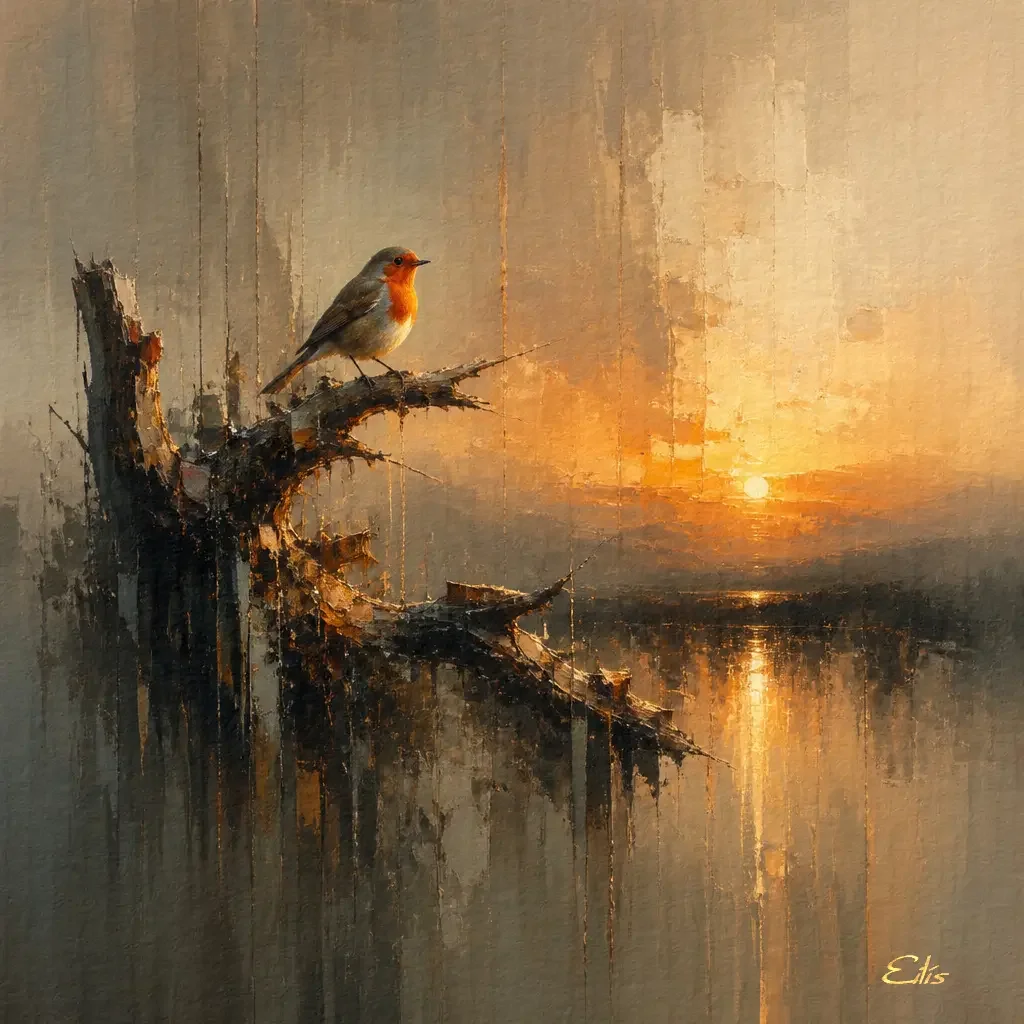
The robin meets us on the way home, in the lane beside the house. He is a regular customer at the feeders by the kitchen window and treats the lane as part of his premises, following us from branch to gatepost with his head cocked, curious about anything the collie's paws turn over. Through the late summer he kept to the undergrowth, a drab, scruffy bird in worn brown feathers, easy to mistake for a sparrow in poor light. The moult is over now. He has come out in his autumn best, the breast a bold russet, the same shade as the bracken on the hill, edged with a fine line of blue-grey above a belly of clean white, and he sits on the lowest hazel branch with that breast pushed forward like a man in a new waistcoat who intends it to be noticed. The trees change colour in silence. The robin sings, the thin, wistful song his kind keeps for autumn, when most other birds have fallen quiet.
Anyone who walks the same wood for years learns its timing by heart, and still the display arrives each autumn with the force of something unrehearsed. The year spends whatever it has left. It hangs everything at once, every canvas carried up from the storeroom, the early studies beside the late work, and leaves the doors open to anyone who cares to wander through. Galleries do this for painters in their later years and call it a retrospective. The year stages its own before the frost, and under those branches I catch a note of apology running beneath the show, as if the light were speaking. I know what comes next, it says. I know what I am about to take from you. Before I take it, look.
So I look. I have no quarrel with the melancholy of this season. It comes sweetened, like a pear on the last day of its ripeness, when the flesh gives under the thumb and the juice runs to the wrist. Spring asks for effort, all that pushing up and opening out, and summer asks to be used, swum in and eaten out of doors before it goes. Autumn asks only for attention. It lets me stand at the edge of the wood with my hands in my pockets, moved and pleased at the same moment, with a fullness under the breastbone that is half ache and half contentment, like the end of a long walk when the legs are tired and the kettle is already on.
Learning where the colours come from changed how I stand in front of them. The yellows are there from the beginning. The leaf makes them in spring alongside the green and keeps them buried under it all summer. When the days shorten, the tree begins to withdraw: it draws what it can back into the wood and grows a seal of cork across the base of each stalk, and the green, no longer renewed, breaks apart and lets the hidden colour through. The reds come another way. Those the tree makes new at the last, from the final sugars trapped inside the leaf.
The third age of a life works on the same principle. Once the busy green of work and duty thins, colours come through that were there all along: a patience the younger self never owned; an appetite for small things; the capacity to sit an hour on a bench in thin sunshine and want nothing to happen. The reds arrive too, the ones made fresh for the season: the language begun at an age when every grammar book assumes its reader is twenty, the first loaf that rises properly, the path into the next valley walked at last after decades of meaning to. These late colours belong to autumn. They could never have shown themselves in June.
Winter waits at the end of all this, of course. The calendar has never kept it secret, and nobody past a certain birthday needs reminding which season follows this one. I hold that knowledge as I hold the knowledge that the sun will set this evening: calmly, and as a reason to be out of doors when it does. A pleasure with an ending tastes sharper. The last blackberries on the bramble, soft and a little winey, beat anything July offered, and a mild afternoon in late October is worth three in May, because nobody expected it.
So the good cups come out on ordinary days now, the candles burn for no reason worth naming, and the bottle someone gave me for a special occasion gets opened on a wet evening of no importance because the soup turned out well. I have stopped waiting for occasions. The occasion is the day itself, whatever day it happens to be.
My pockets come home full. I choose leaves as other people choose fruit at a market, turning them over, holding them to the light: a maple leaf still green at the heart with its edges burnt to copper, like a letter held too near a candle; a beech leaf the colour of a well-baked biscuit; one leaf blotched with pale gilt where the tissue has thinned almost to nothing, as if someone had rubbed gold leaf on with a thumb and moved on. Under the chestnut trees the spiny cases lie split on the path, and inside them the nuts gleam with the deep red lustre of a violin's back, each with its pale, matt eye. The shine lasts a week at most before it dulls to the brown of an old shoe. I gather them anyway, for the week.
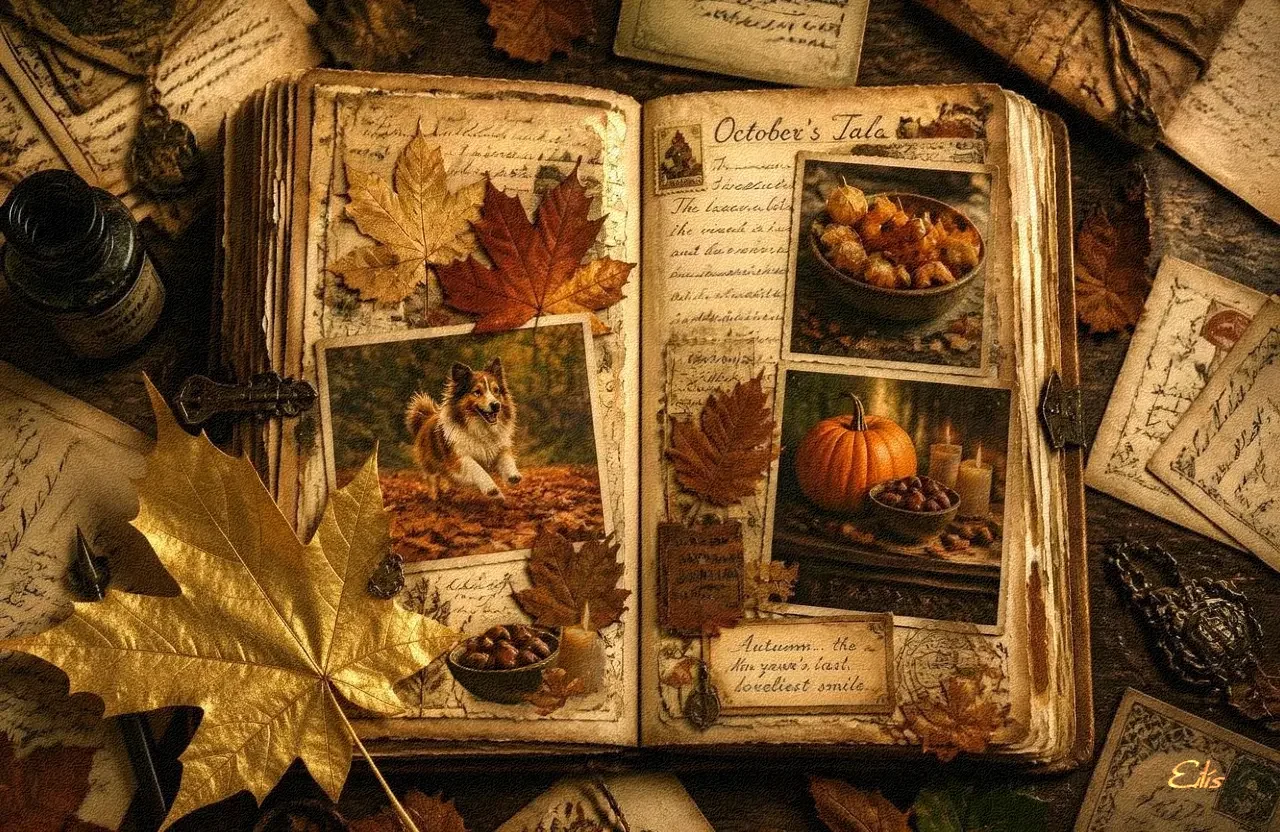
At home I clear the kitchen table, lay down a runner of old grey linen still creased from the drawer, and begin. The pumpkins go down first, three small ones from the market: one deep orange and ribbed like a paper lantern, one squat and striped with green, one as white as candle wax. They sit heavy and cool and anchor everything else. Around them go the cape gooseberries, each in its husk of dried parchment. I peel a few husks back so the papery petals fold open and show the berry inside, a small orange lamp in a paper shade, and eat one while I work: sharp at first, then sweet, with something of tomato in it and something of pineapple. The leaves fan out across the linen from darkest to lightest, wine to copper to lemon, graded as the wood grades them from hilltop to shore. The chestnuts fill the gaps. The gilded maple leaf leans against the white pumpkin, where the pale skin makes the gold look warmer. I move the green-striped pumpkin an inch to the left and step back, and the table settles, as a sentence settles when the right word goes in.
The collie supervises from the doorway, nose working at the pumpkins, aware they are food of a sort, and the wrong sort for a dog.
The mantelpiece gets a narrower version. Every October I bring in one leaf a day and add it to a row along the shelf, until the tree outside stands bare and the row runs from end to end, the early leaves already curled and faded beside the bright new ones, a record of the turning. Between them I set two chestnuts, a stub of beeswax candle, and a single cape gooseberry hung from a picture nail by its stalk, swinging in the draught from the chimney like a lantern outside a door.
The year puts on its great exhibition outdoors, and indoors I answer with a small one of my own, a thank-you note written in its own materials. It changes daily, as the wood does. The leaves curl, the chestnuts dull, the gooseberry husks crisp and pale, and I go out again and gather more. Nothing on that table lasts, and the table is the better for it.
In the late afternoon, if the weather holds, we go down to the water. The sun hangs a hand's width above the hill on the far shore. It sets a couple of minutes earlier each evening, and soon the clocks will go back and dark will fall before the dinner is on the table. From November the evenings belong to the lamp and the hearth. These October sunsets are the year's last long fires, and the sky burns through them with the same extravagance the trees show with their leaves, holding nothing back.
The light changes. For the past hour it has worn the colour of brass. Now it deepens to copper, and the wood on the near shore takes it from behind. Each maple leaf, caught between me and the low sun, glows like the web of skin between finger and thumb when a child presses a torch against it under the blankets: red with the life inside it, each vein drawn in dark ink. Below, the water holds the shore upside down, trunks and branches and the pale flank of the hill, so still that the line where the real wood ends and the reflected wood begins blurs into a smear of gold.
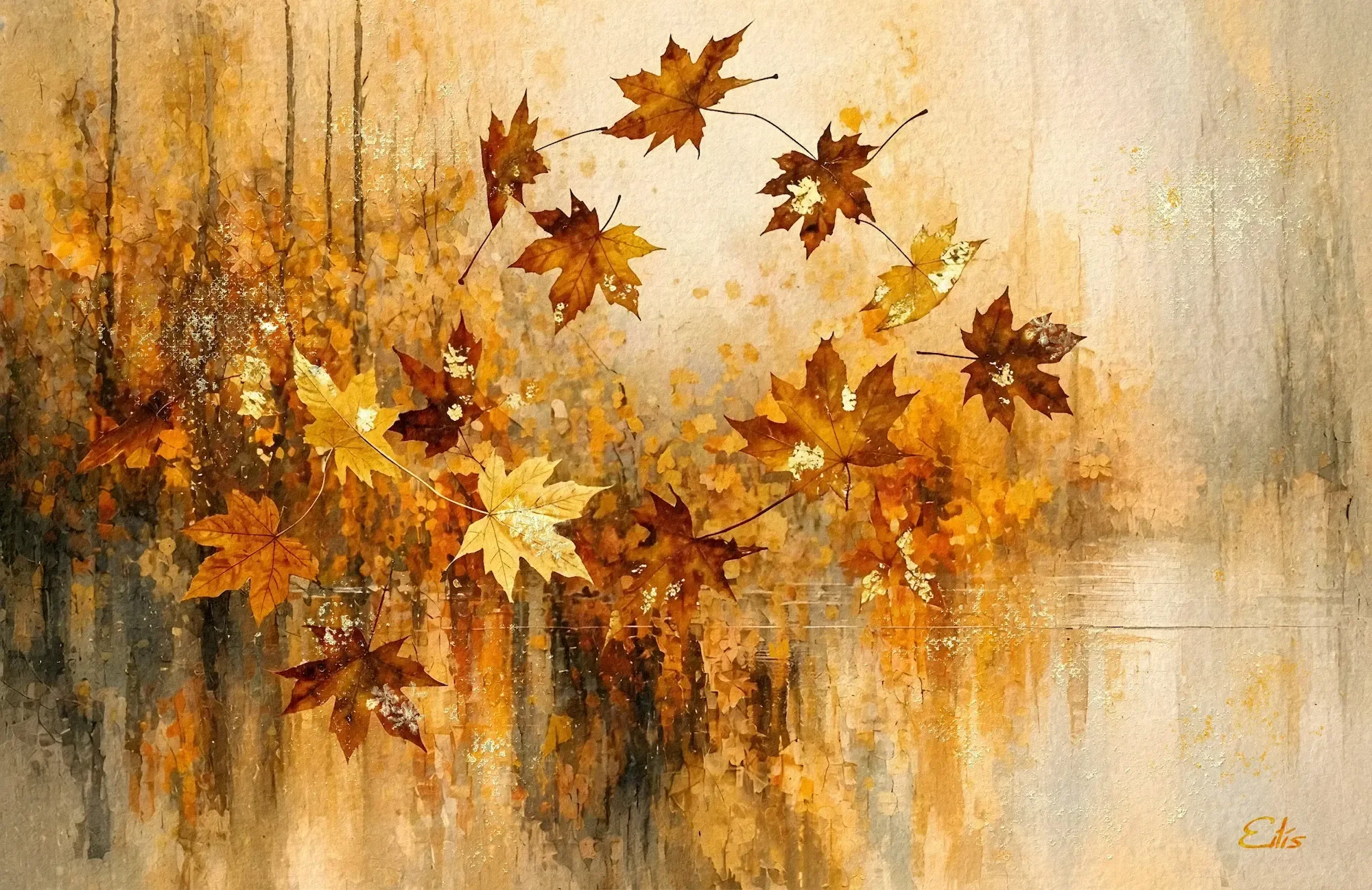
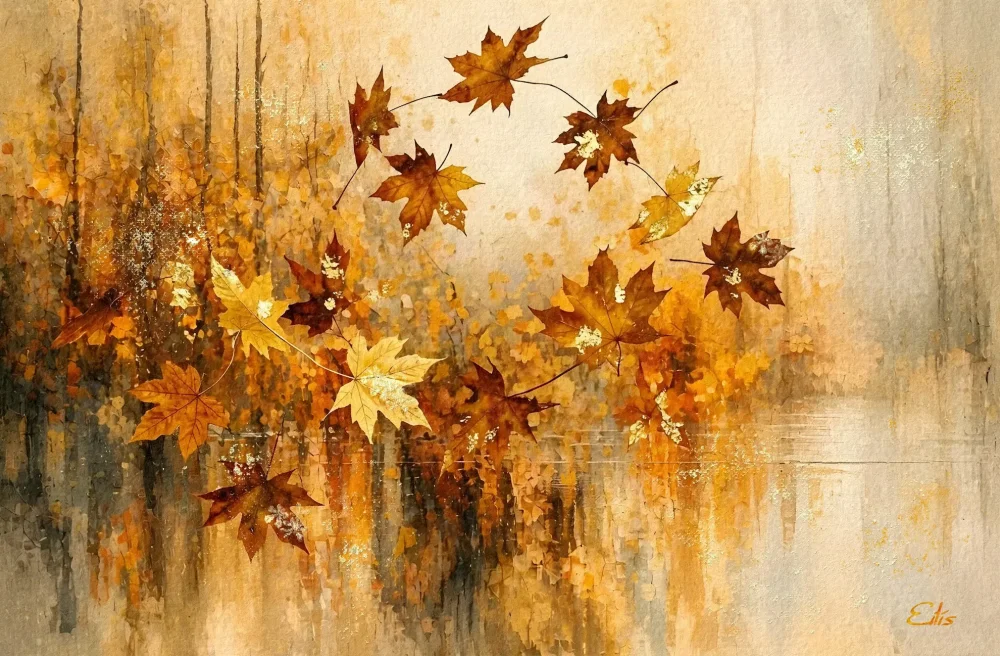
A gust comes across the water. It lifts a handful of leaves from the nearest maple and holds them turning in the air, a loose ring of rust and ochre and pale yellow, each leaf showing its bright face and its dull back in turn. They hang there longer than seems possible. At last they tilt and slide towards the lake, their reflections rise to meet them, and each leaf settles onto its own image and stays.
The collie leans against my leg, a warm weight through the fabric of my trousers, patient in the manner of a creature who knows supper follows sunset. My throat tightens in the pleasant way it does at the end of certain songs. Sweetness and a little sorrow rise together, as yellow and red share a single leaf, one colour hidden there all summer, the other made fresh for the occasion. I gave up trying to separate them long ago. They make a better colour together.
The sun touches the hill. For a minute the ridge glows along its edge like the rim of a copper pan on the stove. The flame narrows to a wire, to a bead, and goes. The afterglow runs through rose into violet, the water turns to pewter, and the cold comes off the lake at once and finds my fingers. Before we turn for home I stoop and lift one red leaf from the shallows, wet and shining, for the end of the row on the mantelpiece.
From the lane, in the blue dusk, the house looks warmer than it is. Inside I kneel at the hearth and lay the first fire of the season: newspaper twisted into knots, a lattice of kindling, three split logs of birch leaned together like people sheltering a match from the wind. The paper catches, the kindling cracks, and wood smoke fills the room, resinous, with an edge of sweetness. All winter the fire will do the work the sky did in October. Through the long evenings it will hold the same copper the wood wore at four o'clock, carried in from the hill and banked in the grate, and I will sit in front of it as people have always sat in front of fires, feeding it and watching the glow travel through the logs.
While the fire takes hold I make the tea. A cinnamon stick goes into the pot, three cloves, two cardamom pods cracked under the flat of a knife so they release their bright, camphor-green scent, a thin coin of fresh ginger, a strip of orange peel pared without the pith. Black tea over the top, water off the boil, five minutes under the cosy, a spoon of honey stirred in at the end. The steam carries the spice cupboard up with it, and for an hour afterwards the kitchen smells as kitchens smell in the week before a feast. The good cup, naturally. I carry it to the chair in both hands, and the heat soaks through the china into palms still cold from the lake.
The book waits on the arm of the chair, a novel I have read twice before. Knowing how it ends frees my attention for the sentences, and a good sentence, met for the third time, has the pleasure of a friend's face across a table. The fire ticks and settles. The lamp throws a small circle of light onto the page. On the hearthrug the collie sleeps with paws twitching, chasing leaves through some dream wood, and now and then lets out a muffled woof at one that got away.
Winter will come. The long nights will come with it, and the grey mornings, and the cold that gets into the hands. When they arrive I will carry this season into them: the sound of the lane underfoot, the ring of leaves settling onto the lake, the robin in his new waistcoat, the white pumpkin and its gilded leaf, the taste of cardamom, a dog asleep by a fire. The third age, like the third season, has fewer joys to offer, yet each one comes in full colour.
Outside, beyond the dark glass, the wood keeps letting go. Leaves come down onto the lake by the hundred and land on water that holds no reflection now, only the gleam of a star or two where the cloud has thinned. The year goes on apologising in the dark. It needn't. I forgave it somewhere around the second cup.
On the mantelpiece, in the heat of the fire, the newest leaf curls into a small cupped hand, and keeps its gold.